• Campaigns
    • POMW
    • Guarding Innocence
    • Palestine Truth
    • Hold On
  • Articles
  • Podcast
  • More
    • About
    • Careers
    • Advertise
    • Contact
    • Submit
    • Subscribe
Be a Guardian
Islam21cIslam21c
  • Campaigns
  • Articles
  • Podcast
  • More
Search
  • Campaigns
    • POMW
    • Guarding Innocence
    • Palestine Truth
    • Hold On
  • Articles
  • Podcast
  • More
    • About
    • Careers
    • Advertise
    • Contact
    • Submit
    • Subscribe

Stay Updated

Stay updated to receive the latest from Islam21c

Subscribe
Made by ThemeRuby using the Foxiz theme Powered by WordPress

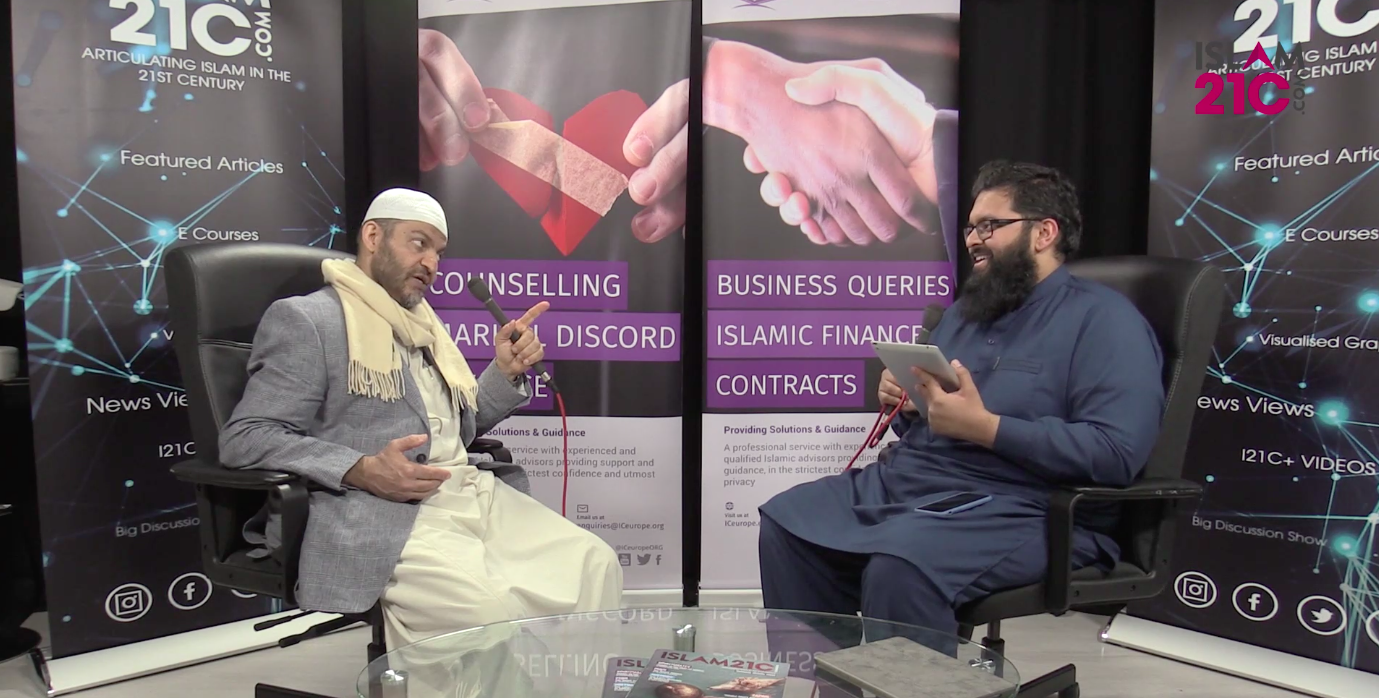
Ramadan Q&A with Sh Haitham al-Haddad

By Shaykh Dr. Haitham al-Haddad 24 Sha 43 ◦︎ 27 Mar 22

Sh Haitham al-Haddad sat down with our chief editor, Dr Salman Butt, to answer YOUR questions about Ramadān. Below are 17 Ramadān Q&A clips…

Can you advise on a routine to have during Ramaḍān?


If your relatives invite you over for Iftar and it clashes with your Ibadah (worship), what should you do?


What is the ruling on Taraweeh?


Do you advise sisters to pray Taraweeh in the Mosque?


Can you hold a Mushhaf during the prayer?


Is it permissible to eat in public during Ramaḍān if I’m not fasting due to my cycle?


What should you do if you have a number of missed fasts and you haven’t made them up before the next month of Ramaḍān?


If someone struggles with migraines, can they break their fast?


If you can’t remember how many fasts you have to make up, what should you do?


My cycle prevents me from fasting the 6 of Shawwal. Can I pray my Shawwal fasts first and then make up my Ramaḍān missed fasts?


I follow the 18 degree timetable but my masjid prays Isha at the wrong time. What should I do as I won’t be able to pray in Jama’ah for the first 15 days of Ramaḍān?


Where can I find the 18 degree prayer time calculator?


Can I use a Miswak during fasting hours?


What invalidates your fast?


Can you pay Zakah on community projects?


Should I check how poor someone is before giving them my Zakah money?


If I have an account in an Islamic bank, do I still need to pay Zakah? 


Donate Now:

This Ramadan Islam21c is supporting One Ummah and encouraging all our readers to donate their Zakah and Sadaqah to one of their many projects.

[donationbanner]


Source: www.islam21c.com

Notes:

TAGGED: #Ramadan, 18 DEGREES, CHARITY, FAJR, FASTING, FASTS, FIQH, HEALTH, IBADAH, IFTAR, LOCAL ZAKAT, MASJID, MENSTRUATION, MISSED FASTS, MUSHAF, POOR, POVERTY, PRAYER TIMES, PRODUCTIVITY, QURAN, RELATIVES, ROUTINE, RULINGS, SHAWWAL, SISTERS, TARAWEEH, TARAWIH, VISITING, WOMEN, ZAKAH, ZAKAT
Shaykh Dr. Haitham al-Haddad 24 Sha 43 ◦︎ 27 Mar 22 10 Ram 41 ◦︎ 3 May 20
Share This Article
Copy Link
By Shaykh Dr. Haitham al-Haddad
Follow:
Shaykh Dr. Haitham al-Haddad is a jurist who seeks to contextualise classical Islamic knowledge for the modern era. He is a firm believer that Islam is uniquely qualified — more than any other system — to build a divine civilisation capable of helping humanity to enjoy a better life in all spheres by maintaining the correct balance between the rights of the Creator and the rights of the creation. He believes Islam is the only viable alternative to the failing unjust and oppressive contemporary world systems, as Allah says: "You are the best nation produced [as an example] for mankind: you enjoin what is right, forbid what is wrong, and believe in Allah." (al-Qur'ān, 3:110) According to this verse, Shaykh Haitham identifies the pillars of Islamic reform as īmān (faith), unity of the Ummah, impactful action, and knowledge. Drawing from his expertise in Islamic principles — Usūl al-Fiqh, Maqāsid al-Sharī‘ah, ‘Aqīdah, and other Islamic sciences — he promotes these foundational pillars to guide the Ummah’s revival. He is known for developing advanced theories that explore the role of Islamic jurisprudence in obtaining solutions for the contemporary challenges facing humanity, and he critically re-evaluates how Islamic legal rulings (fatāwa) can be formulated in light of modern sociopolitical realities. Shaykh Dr. Haitham al-Haddad earned his PhD from SOAS, University of London, with a doctoral thesis on Islamic jurisprudence concerning Muslim minorities. He also holds a bachelor’s degree in Sharī‘ah and Law from the University of Omdurman, Sudan, and a degree in engineering from the renowned King Fahd University of Petroleum and Minerals (KFUPM) in Saudi Arabia. He has undertaken intensive studies in management, becoming a certified ISO 9000 auditor. In addition, he has studied various Islamic sciences under leading scholars of the Muslim world, including the former Grand Mufti of Saudi Arabia, Shaykh ‘Abdul-‘Aziz ibn Baz, among many others. He has obtained many classical ijāzāt in various Islamic sciences, including Qur'ān and Hadīth. Shaykh Haitham has served as an Islamic judge for several UK-based arbitration and legal bodies for over 20 years; he is a judge at Islamic Council. He has delivered hundreds of courses on topics such as Fiqh, ‘Aqīdah, Usūl al-Fiqh, Maqāsid al-Sharī‘ah, Tafsīr, Sīrah, Islamic Thought, Islamic Leadership and Management, Da'wah, Reform, and Political Engagement. Shaykh Haitham has also submitted many academic papers in many universities around the world. He is frequently consulted by numerous Islamic organisations across Europe and beyond, and serves as a senior scholar at Islam21c. Shaykh Haitham has lectured in various universities around the Muslim world, provided counsel to Islamic institutions, authored several books and textbooks for different institutions, and travelled extensively to advocate for the reform and unity of the Ummah.
Previous Article Palestine: Activists win landmark Supreme Court ruling against UK Government
Next Article Libyan government advances against warlord Khalifa Haftar
Leave a comment

Leave a Reply Cancel reply

Your email address will not be published. Required fields are marked *

Related

When the oppressed become the oppressors

When the oppressed become the oppressors

Current Affairs
From minaret to Miʿrāj — the return to al-Aqsa

al-Asqa’s continued closure is affecting the entire Ummah

Current Affairs
The worship of letting go

The worship of letting go

Islamic Thought
Advice for those delivering the Eid khutbah

Advice for those delivering the Eid khutbah

Khutbah
Show More
Facebook Youtube Instagram Telegram Whatsapp

© 2026 Islam21c | All rights reserved

Work with us

Whether you want to volunteer or be a part of our team, there are ways you can always make a contribution to the Muslim Ummah.

View vacancies

Stay connected!

We know how it feels to miss out on the latest breaking stories, exciting project announcements, and multimedia productions, so here is this handy box to make sure you don’t miss a thing! Signing up takes just 10 seconds.

Subscribe
Welcome Back!

Sign in to your account

Lost your password?