In collaboration with

In collaboration with
A Brutality Called Torture
A
Brutality
Called
Torture
The first time Adel was arrested and taken into a cell, he could tell — despite his blindfold — that there was another prisoner in the cell, too.
As he stood with arms shackled, the prison guard told him to cock his head back and take a look. As he did so, the guard helpfully raised his blindfold enough that he could get a clear view ahead. It was his father.
Blindfolded and in a stress position, his 56-year-old father was made to hold a squat as he faced a wall. Adel couldn’t help but call out: “Just sit down!” Not recognising his son’s voice, Adel’s father mistook this as a command from the prison guard and relaxed his stance to sit on the floor. That was enough. Two guards marched forward and began to savagely beat Adel’s father, until his heaving and choking body was thrown back on the floor.
For Adel, the rounds of torture began over 30 years ago now, but he remembers exactly the parts of his face where cigarette ends were burnt onto.
He remembers the sequence that cord would be wrapped around his wrists in order to hang him from a hook in the ceiling. He remembers the pattern of the strikes different officers would use to assault prisoners, since they each had their own tailored methods.


Enduring torture while imprisoned 13 times between 1983-1989 means the specifics of every stint in detention can become blurred. What is not lost, however, is the scar tissue Adel has from it all. It’s a marvel to consider the sheer task that the human body undertakes to heal from brutality on this scale.
How does the corporal shell we inhabit resume functioning, following skin burning, electric shock, fingernails pulled, muscles aching, sensory overload, sensory deprivation, blunt force, flesh cut apart, hair pulled from follicles, extreme heat to rouse prisoners lethargic from sleep deprivation, stress positions that first unleash unbearable pain and then end in muscle failure?
There were times when Adel would be handcuffed and suspended from open doors. While cuffed and blindfolded, guards would also beat Adel with batons all over his body, particularly focusing on the chest, back, and face. They then put wires around the little fingers on each hand and administered electric shocks at timed intervals.
Sometimes, the anxiety of the next shock was worse than the shock itself. But… that was the point.
Any medication he relied upon would be confiscated on entry, while guards observed the effects of prisoners succumbing to their medical ailments. Some cells were so crowded, that the poor ventilation left grown men literally gasping for air, struggling in stifling humidity.
Then there were those who were forced to sing songs in praise of the Egyptian army during the torture. Adel also observed those who didn’t escape police custody alive, their families picking up the baton to serve life sentences of anguish instead.
Adel’s torture sessions would often begin with security officers using electric shocks on him while blindfolded, stripped, and handcuffed.
They would then proceed to slap, punch, or beat him with sticks and metal bars.
When he failed to give the officers the answers they wanted, they would increase the power and duration of the electric shocks, placing them in the most sensitive parts of the body.
blindfolded
stripped
handcuffed

The officers would typically employ two types of stress positions to inflict the severest pain on prisoners. In one, they hung men above the floor with their arms raised backwards behind them, an unnatural position that causes excruciating pain in the back, and sometimes dislocates their shoulders.
In a second, called the “chicken” or “grill”, officers placed suspects’ knees and arms on opposite sides of a metal bar, so that it lay between the crook of their elbows and the back of their knees. They then tied the hands together above their shins. When the officers lifted the bar and suspended the suspects in the air, like a chicken on a spit, they suffered excruciating pain in the shoulders, knees, and arms.


During Adel’s interrogations, he would be asked questions that became more extreme and fantastical as the sessions progressed:
Do you want to kill the president?
Do you want to stage a coup?
Do you want to overthrow the government?
Have you drawn up assassination plans for the President?
Throughout the decades, Egypt’s Interior Ministry developed an assembly line of serious abuse to collect information about suspected dissidents and prepare often fabricated cases against them.
This begins at the point of arbitrary arrest, progresses to torture and interrogation during periods of enforced disappearance, and concludes with presentation before prosecutors, who often pressure suspects to confirm their confessions and almost never investigate abuses.
Egypt remains the only country to be the subject of two public inquiries by the United Nations Committee against Torture, which wrote that facts gathered by them “lead to the inescapable conclusion that torture is a systematic practice in Egypt.”
“The people who make wars, the people who reduce their fellows to slavery, the people who kill and torture and tell lies in the name of their sacred causes, the really evil people in a word —
these are never the publicans and the sinners.
No, they’re the virtuous, respectable men, who have the finest feelings, the best brains, the noblest ideals.”
Aldous Huxley
Adel’s memories of the rounds of torture have melded into one extended experience. First, there is the knocking, banging, and battering down of your door. One particular time, Adel was at home cradling his sleeping baby girl when police entered his home and threw him forward, with her still in his arms. They took Adel, then they started asking him:
“Where is your car?
What colour is it?
What model is it?”
Adel had no idea what was going on. They then took him to a single cell with no communication. Over the course of a few hours, one by one, he heard more men being brought into the adjacent cells until the whole unit was filled. It went from 5, 10, to 15, until all the lower cells were filled up and Adel was transferred upstairs.
Interrogation went on, with rounds of torture in between the repetition of the questions. One of the men arrested in the cell nearby to Adel was tortured so badly over multiple days, his hair fell out. They assaulted him using a piece of wood with a nail hammered into it to puncture holes into his newly shaven head. His hair never grew back. With a scalp still pouring fresh blood, he “confessed” to assassinating the Home Secretary. That same day, the Head of Police held a televised press conference hailing a successful sting operation that caught the assassin of the Home Secretary.
During interrogation, the questions were along the same themes:
Were you part of the assassination plot against Sadat?
Do you know who killed Sadat?
Do you want to overtake the government?
Do you want to kill Mubarak?
Are you a member of a jihad group?
What do you think of jihad against the government?
Mubarak is sick, did you give him the flu?
Each negative response would result in torture. Most of the fellow prisoners in the cell, Adel recognised from his local community. There were taxi drivers, farmers, doctors, shop keepers, teachers, professors, engineers, young students, army colonels, some lieutenants in the police, students. Some were young, others were double Adel’s age.

Everybody was being held on similar charges. In fact, often the same charge was woven through multiple arrests.
“In Egypt, they would arrest people most by association. For example, if I am your neighbour and your husband comes to visit me, they’ll take your husband and charge him with conspiracy. If my son is getting married and I go and drop an invitation to his friend’s home, then his friend’s family get arrested for being part of a plot. If you have a boat on the River Nile and one of your passengers is arrested a year later, you’ll be arrested for belonging to the same group.”
Everybody knows somebody who knows somebody — and they were all rounded up for interrogation, torture, and then release to a communal basement where they were left to structure their own days. Sometimes, there were four people in a cell, sometimes ten or more. Everyone slept on the floor. There was no toilet, prisoners were taken to an outhouse once a day. Numbered cells housed prisoners put together alongside one another.
There was the physical torture, then there was the psychological intimidation on top. “When we would hear the footsteps and keys jangle of the guard, we knew someone would be selected to go up for torture. The guards would bang their fists on the locked door and shout through the latch:
“WHAT’S YOUR NAME?”
and then walk to the next cell and bang and shout:
“WHAT’S YOUR NAME?”
and then go on to the next one and the next one.” The anxiety only grew with each footstep.
“Usually, when people are arrested and tortured, they will pray, asking God to relieve them of this terrible situation. But honestly, I didn’t. I only prayed to God, asking for my cell door not to be opened. I just wanted to die there and then, than face more torture.
The only goal for my life was that door to stay shut…
but it never did.”
The prisoners pulled together as one body, in a way that Adel says saved them all.
“We would be together and hear the cries of the one being taken for interrogation. When he returned, we knew what to say to him, how to comfort and treat him. Because yesterday it was us, and tomorrow it will be another.”
Sometimes, the prisoners bandied together and rushed the guard. Eight prisoners would grab a single guard and take his keys off him, opening up all the cell doors in the unit. The guards would refuse to re-enter and, instead, send smoke bombs down to disperse the groups. Then there was the learning. “We had amazing minds amongst us, people who had studied medicine, art, Qur’ān, maths, literature.”
Prisoners made a schedule and hung it up:

The timetables would adjust, according to demand and whether the teachers had been taken up for a round of interrogation and torture in between.
“The cells of the unit were alive with Qur’ān recitation. Some people didn’t come to learn, they just wanted to listen. Sometimes, the literature teacher would finish giving his lesson and his student would swap with him and begin teaching him Islamic jurisprudence in return.”
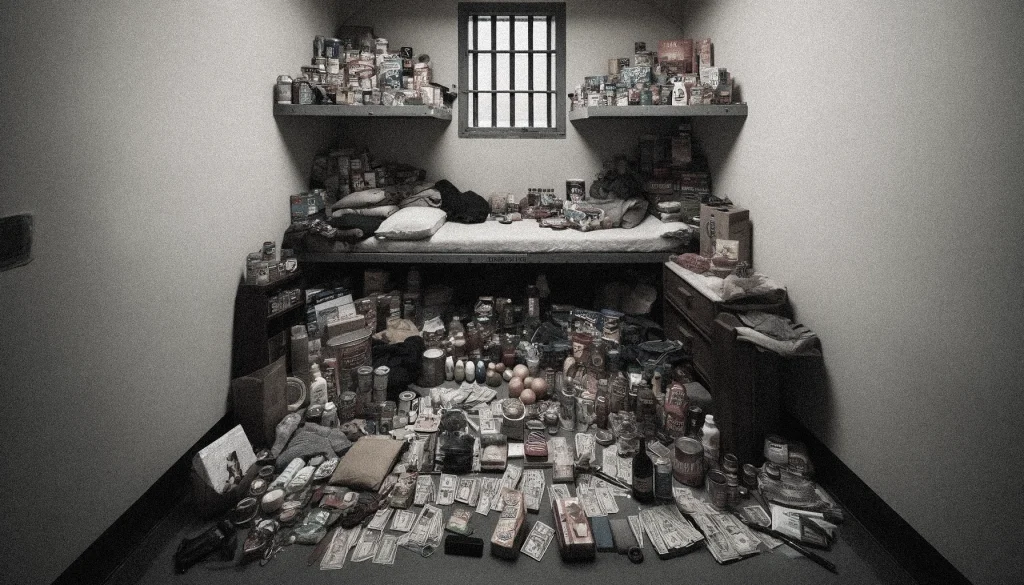
In a single open room, prisoners had to get resourceful. With contraband goods smuggled in from visitors or what the guards had left over, they used bread, cardboard, and empty boxes to make furniture. Yes, actual functioning furniture. They would take the box, wet the bread, and mould it to make a table and chair. “We even decorated it, if we found some ink”, Adel says with a laugh.
One of the brothers had left behind a young wife and baby when he was arrested. Word spread that they were struggling hugely in the absence of their main breadwinner, so the prisoners gathered all the cash given and smuggled it out to his family through visitors. Prisoners played chess together. They laughed together — cried more often — and always, always prayed as one.
When conditions got hard, the prisoners would go on a collective hunger strike. This won them the right to radio, newspapers, and association with one another. “We were all in the same case, had the same understanding, and were in the same struggle. We felt the brotherhood with one another. When you have a personal hardship, but have support around you, this helps you to bear it somehow.”
Visitors were sometimes permitted to bring in items during prison visits. Every single thing the prisoners received would be deposited into a designated cell. Cash, food items, non-perishables, toiletries, paper, books, pens, board games, magazines, clothing, and even aftershave were dropped into one big communal pile. From there, it was divided up equally between the prisoners — some swapping items at their own discretion.
If you had one story to take up to aliens in some extraterrestrial place, showing them what humans are capable of doing to one another, Adel’s would be a strong contender.
Not just for the brutality that we are capable of, but the resilience in the face of vicious inhumanity.
There are reserves of strength Adel testifies to drawing upon, ones that didn’t and cannot — for him — come from any Earthly realm.
Mercy in the eye of the storm.
“It is possible, at least sometimes
To ride a horse
Inside a prison cell?
It is possible for prison walls
To disappear,
For the cell to become a distant land
Without any frontier?
The prison guard got angry:
What did you do with the walls?
I gave them back to the rocks.
And what did you do with the ceiling?
I turned it into a saddle.
The prison guard got angry.
In the morning,
He shouted at me:
Where did all this water come from?
I brought it from the Nile.
And the trees?
From the orchards of Damascus.
And the music?
From my heartbeat.
And he returned in the evening:
Where did this moon come from?
From the nights of Baghdad.
And the nectar?
From the vineyards of Algiers.
And this freedom?
From the chain you tied me with last night.”
Mahmoud Darwish
A One Way Exit From Egypt
A
One Way
Exit From
Egypt

Now qualified as a human rights lawyer, and with a vast network of connections, Adel was scouted by Amnesty International to support their investigations of political repression and torture by the Egyptian government.
Amnesty investigated Adel’s own case and documented him as a “prisoner of conscience”. His legal expertise caught Amnesty’s attention and their collaboration turned into a long-term relationship where Adel would routinely assist with the cases Amnesty were working on, and bring forward important testimony and detail required by them.
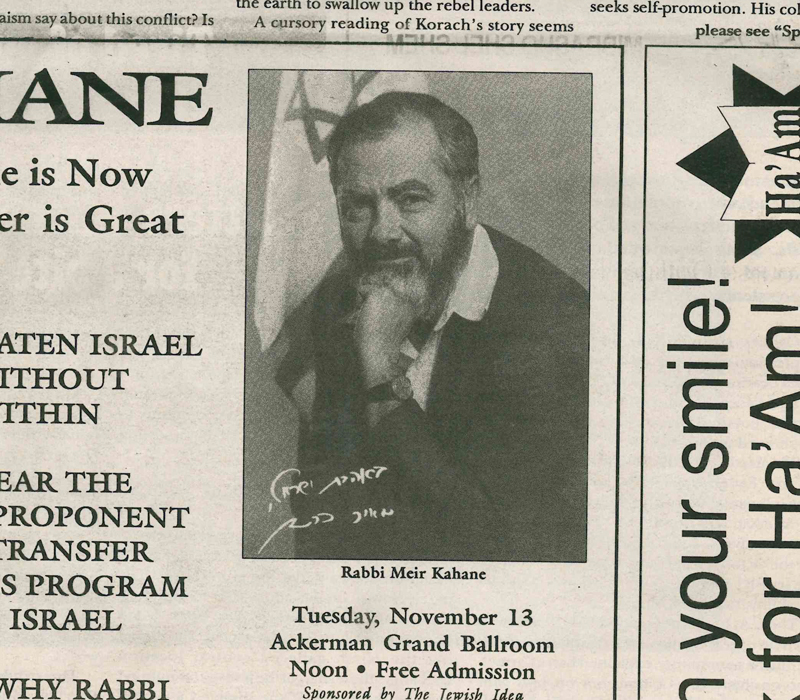
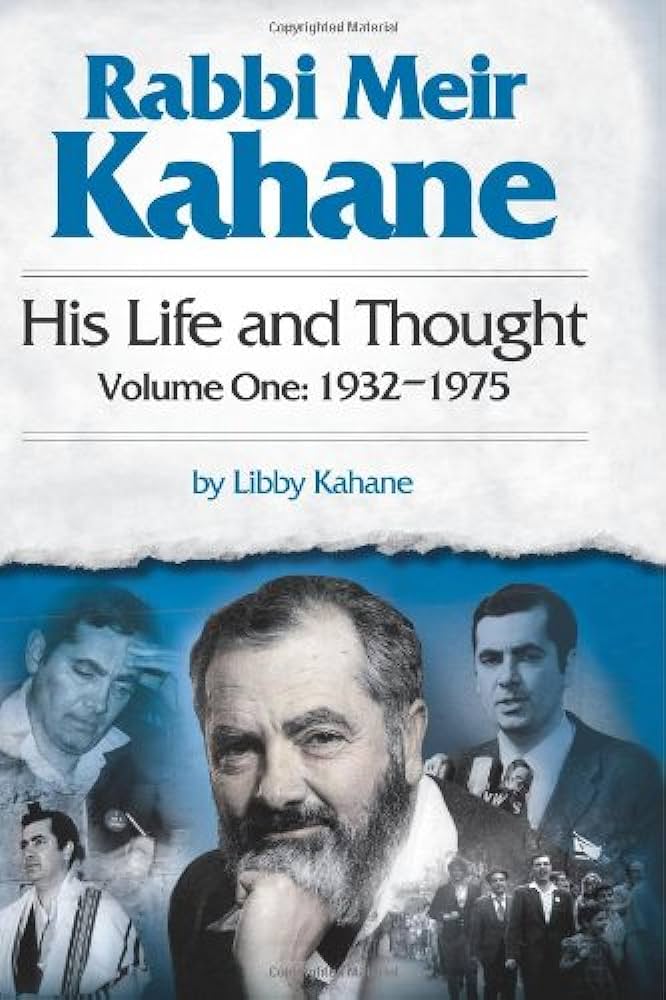
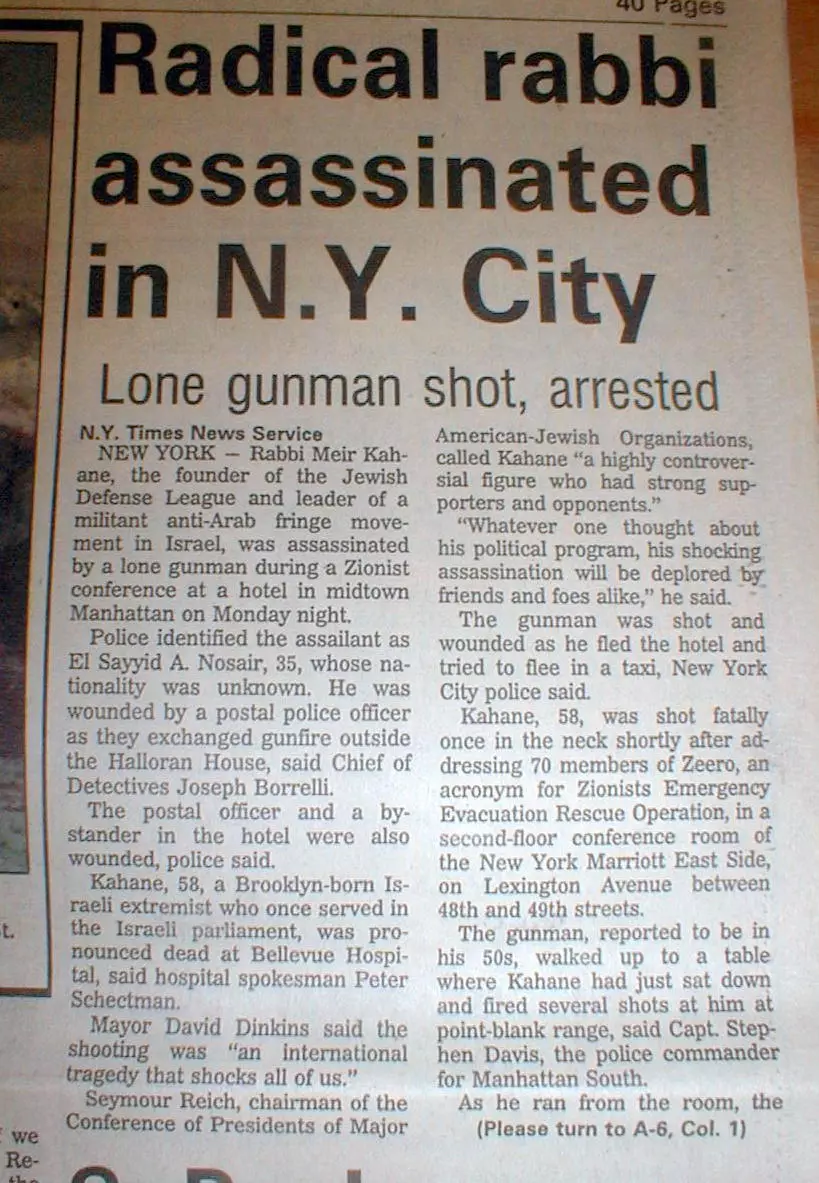
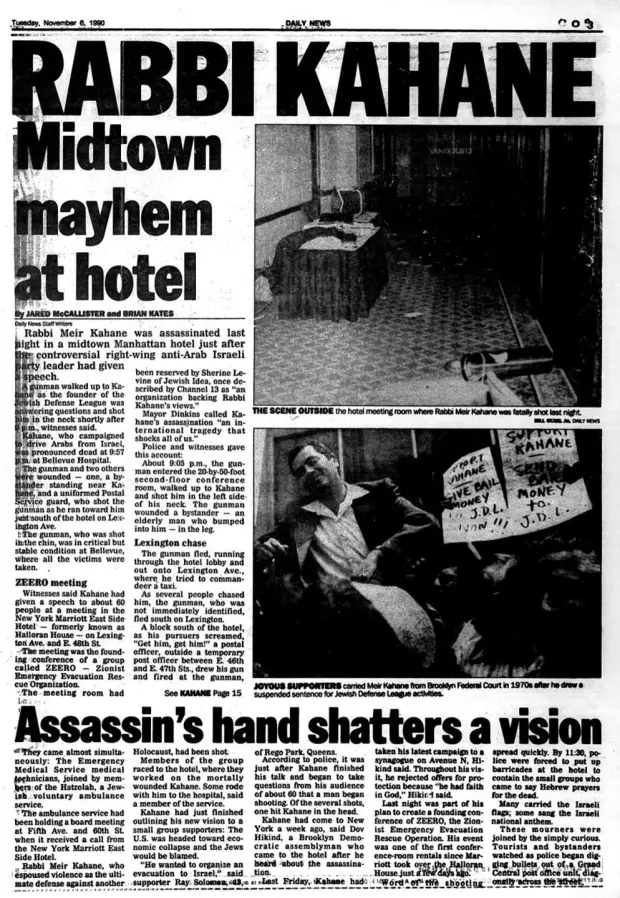
When El Sayyid Nosair, a 34-year-old Egyptian immigrant who repaired air conditioners for the city of New York, was arrested for the murder of Rabbi Meir Kahane, Adel was asked to join the legal team in New York representing him. Rabbi Kahane was an American-born Israeli political demagogue and the founder of the radical Jewish Defense League. He was shot dead on 5 November 1990, with Nosair the main suspect.
Adel and his close friend Muntasir visited the HQ of Special Branch in Egypt. The terms of him joining the legal team were clear:
“We will let you go to America for the case, on the condition that you won’t come back.”
It was in Cairo that Adel made the decision to leave for good. He always felt something against him was brewing, but now that constant discomfort was turning into active anxiety. He suspected something big and bad was ahead. A total of 13 imprisonments between 1984-1991 had him asking what kind of life he expected to live.
“It was a constant humiliation day and night, to be living from one imprisonment to another, not knowing when they’d come for you again and for how long. Not knowing what the next charge would be, how extreme the torture would be.” Then there was his family. His parents, wife, and children were living no life at all, and Adel couldn’t help but feel the crushing responsibility for that reality.
When he went to the HQ in Cairo that day, none of his family knew of the plan. To be fair, neither did Adel. The offers being floated were coming in real time and Adel’s decision-making was rapid speed. He was issued his visa for America and left, having absolutely no idea what was ahead.
Arriving in the Big Apple, Adel and Muntasir began working on Nosair’s case in a setting akin to a council. Adel was busy with paperwork for the ID as a legal assistant and Nosair’s family gave him Power of Attorney. The case was simple enough as attempted murder goes. There was no evidence to say he shot the Rabbi, despite cameras and hundreds of people at the public speaking event where Kahane was shot.
When the suspect was acquitted of the murder for lack of evidence, Nosair’s Jewish attorney, William Kanstler, was targeted by fellow Jews. They smeared pig’s blood on his office window and left a pig’s head on the doorstep. He was a traitor. And within the circus that followed the legal case, Adel’s role in the trial was on hold. From New York, Adel applied for a visa to the UK to meet friends, intending to return to America for the remainder of the case.
Landing at Heathrow, Adel came upon and seized an opportunity to fulfil one of the greatest dreams of his life: to go for the Hajj. For international visitors, the opportunities for Hajj vary spectacularly. Many poorer countries rely on a lottery system where interested pilgrims are selected by a government ministry.
Some wait years, even decades, and they may never be selected. In countries like the UK, however, regular Hajj operators can offer tickets to any person with the funds. Adel applied from the UK, knowing he would never have this chance in the US.
It was 1992 and this was Adel’s first and only Hajj. I ask him to tell me what he remembers of it.
His voice drops to a whisper.
“It was beautiful.
It was one of the most beautiful feelings you cannot describe. Whatever you say, it’s not what happened.
Whatever you say, it’s not what you’ve seen, what you heard, what you experienced.
Whatever words you use to describe it, it’s not that.
In that place, you see how great and beautiful this way of life really is.”
“What’s the strongest memory you have of it?”
“There is one that has never left my mind.
A group of German pilgrims I saw standing in front of the Ka’ba.
The sun was beating down on us all and their hair looked like spun threads of gold glistening in it.
Their eyes were as blue as the sky and their fair skin had a red undertone to it.
After they completed their rites, they began walking backwards until they had exited the Mosque complex.
They did not want to turn their back on the Ka’ba.”
The symbolism, the purity, and the reverence of this group of native German pilgrims touched Adel so deeply, he still smiles at those backwards footsteps two decades later.
While finishing up his own rites of Hajj, some friends who worked in the visa offices invited him to go and see Pakistan. In a world well before 9/11, Pakistan in 90s peacetime was not what we think of today. It was a hub of international visitors who all came with many diverse interests. Hippy trail. Volun-tourism. Foodies. White Americans finding themselves. Second-generation Pakistanis from the West finding themselves.
Cheap land. Business opportunities. Adel was curious and sold.
However, at this point even I had to stop Adel, all this globe-hopping was hard to keep up with. How does someone just go from covering a case in New York to heading to Britain, then randomly going for Hajj, before popping over to Pakistan? When I ask Adel, he looks almost nonchalant.
“I wanted to go, so I went?”
he says with a shrug. And that’s Adel all over. There’s a randomness to him. I’m pretty sure if he took the MBTI, he’d be an extreme P.
He’d already spoken about how he feels caged by routine, and decisions like this prove it. For Adel, it’s no biggie to hear of a trip going, and grab his sandals on the way out.
His friends at the office arranged his visa and soon he found himself helping out in the refugee camps of Peshawar and studying with the renowned teacher Badiyah al-Sindhi. It was not just new knowledge Adel picked up, however, but an almost fatal dose of Malaria. It was no exaggeration to say Adel was close to dying. His fever ran to over 40 and he continued to perspire while standing under freezing showers. A private doctor accompanied him back on the plane to New York, with a stopover at Heathrow Airport in London.
The connecting flight was not until the following day, but Adel was in no state to fly. Almost collapsing at the airport, he asked a friend to help him sort a hotel room for the night, as his condition was deteriorating. At the same time, bad news was reaching Adel from home. His friends had been arrested again, Mubarak’s men were hungry for prisoners. Sick and now in renewed danger, Adel applied for a visa to remain in Britain and, with the backing of Amnesty International, was granted one within 24 hours.
He never saw Egypt again.
Right by the choppy waters of the Nile at night-time, the police began by stripping Muntasir of his clothes and beating him in public. Muntasir called out in pain, before both were bundled into a police car.
Maybe our paths will cross when this universe folds in and makes another.
Maybe, at the point when all that is, and all that’s ever been, collapses into everything else and is remade, our paths will cross, however briefly, and our terminus become a junction.
It may be a long shot.
I will take it and hope and trust our paths will cross again.
Epilogue, Oliver Tearle