In collaboration with

In collaboration with
A Country Called Egypt
Menu
A
Country
Called
Egypt
It was in the Egypt of the 1960s that Adel spent his early childhood years. A post-war economic boom saw the country go through a “golden age” of culture, art, and fashion.
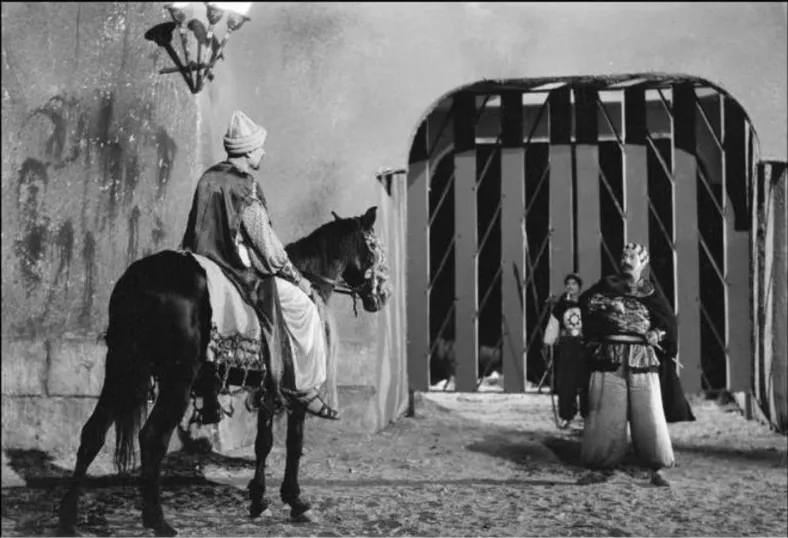
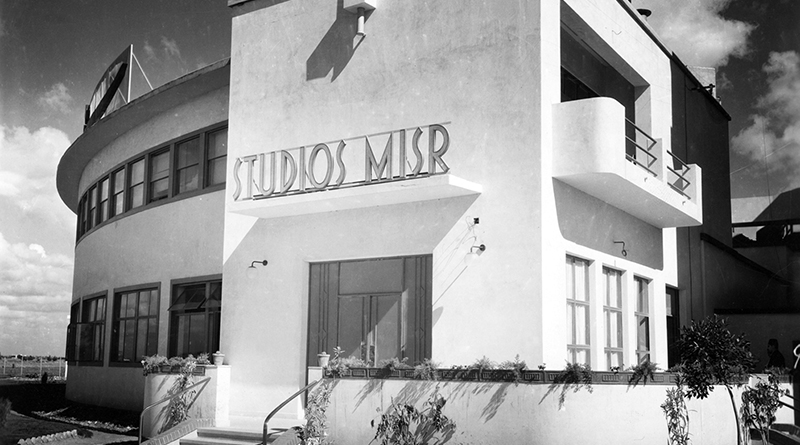
It was now that Egypt was enjoying her domination of Arab cinema, creating a unique blend of that silver screen glamour (think Omar Sharif and Faten Hamama) and centuries-old culture. Studio Misr had expanded to include more genres of film, with Egypt leading the way in movies with experimental Hitchcock-style psychological devices, adding more diverse genres to Arab cinematography.
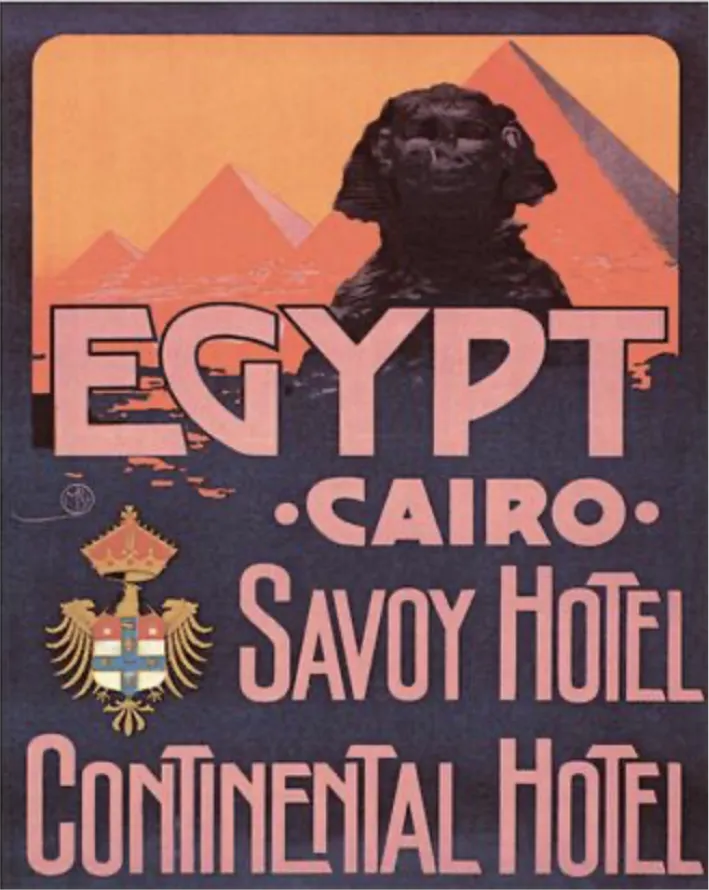
Audiences appreciated it. Not just within the country, but Egypt was enjoying an influx of tourism for those who wanted a bit of modern and a bit of ancient in one neat fortnight. Adel grew up in a country with all the trappings of a cosmopolitan society. Rapid economic growth saw a flourishing social scene, cafe culture was peaking (Turkish coffee, please) and international visitors could doze in the sun in a bikini before the shisha pipes and belly-dancing shows scheduled at dusk.
As a centre of culture and a new type of modernity, Egypt was also enjoying a new kind of interest — or perhaps respect — from the outside world, as a renewed interest in the country filled the population with a sense of national and cultural pride. The exoticism movement in the US no doubt helped, too, as the West’s roaming eye fell on Egypt as a hot spot of a place exotic enough, yet still allowing for convenience and vice.
With rapid economic growth, a hugely popular leader, President Gamal Abdel Nasser became the figurehead for the pan-Arab unity movement, ideologically uniting the shared cultures and history of Arab nations under one umbrella. In the geo-politics of the time, Nasser was eager to establish the region as independent players from the Soviet-American Cold War.
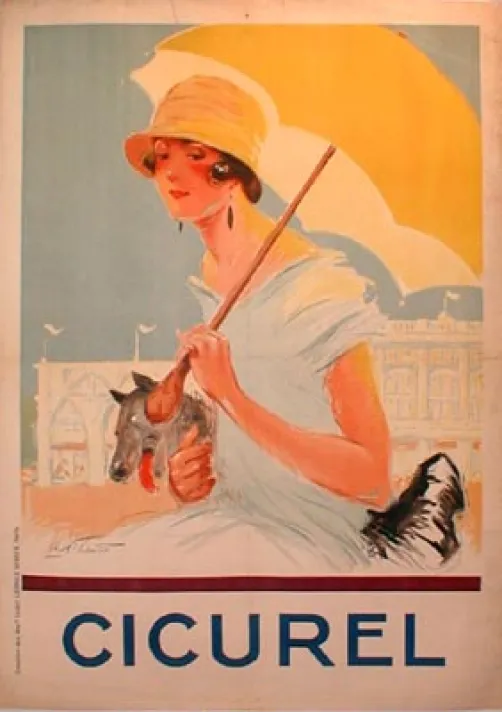
All these events on the world stage weren’t taking place in a vacuum for Adel, however. Cairo as a centre for business opportunity and high-end fashion meant that Adel’s father was thriving in his job at Cicurel department store, considered the Harrods of Cairo. Always immaculately dressed (pin stripe suits and polished shoes a must), Adel’s father dealt with international fashion buyers and welcomed in the uber-rich clientele who made Cairo a stop — alongside Paris and Milan — in the sites of their shopping pilgrimage.
Alongside this, politically Nasser-fever was also undeniable. It seeped into the consciousness of every Egyptian street.
Shops bearing his portrait, homes with his image positioned above the door as you entered, school anthems recited every morning in praise of Nasser, every public building paid homage to their beloved leader. Every makeshift football pitch did too, apparently, as Adel recalls how — after scoring a goal — the victor would outstretch their arms and euphorically declare, “I am the son of Abdel Nasser!” When a fight broke out between the local kids, the offending party would be encouraged, “Tell the truth… in the name of Abdel Nasser!”
He was seen as courageous and a lover of his homeland, wanting to lead a united Arab force that would confront the might of America, England, and Israel. He bolstered national pride for a country that was willing to overlook his mistakes to adulate someone who restored pride back into the chests of Egyptians. Living standards and literacy rates dramatically improved and his land reforms meant that rural Egyptians in the Nile Delta and Upper Egypt could finally own the lands they had tirelessly worked on for meagre wages before. When Israel defeated Egypt in the Yom Kippur War of 1967, the people refused to accept Nasser’s resignation — taking to the streets to support their leader.
“Nasser!
Nasser!
Nasser!”
Adel remembers the effect of Nasser’s modernisation policies as well as his anti-imperialist stance. Like everyone else, his family celebrated the nationalisation of the Suez Canal and the large industrial projects Nasser completed, including the Aswan Dam. Egypt is often lovingly referred to as “Umm al-Dunya” (Mother of the World) by her citizens and hearing Nasser say he would shed the country of British influence for Egyptians to do things on their own terms turned him into a cult figure.
To cement an era of greater collaboration and admiration for America’s Cold War rival, Nasser also sent scores of young men and women overseas to learn and promote Soviet ideology. The “soft” war, if you will. Where it mattered, Soviet culture was slowly seeping into the institutions and structures most of the populace engaged with. School systems, media, movies, and entertainment were now teeming with images of liberal, carefree living — free from the shackles of religion, social pressure, or societal demands.
Studio Misr began to feature scantily-clad girls giggling their days away — running into the sea for a swim, partying and cosying up to eager male suitors. Egypt became one of the main exporters of entertainment across the Arab world, with Lebanon being known as the more scandalous. “Beirut was known as the Soho of the Arab world”, Adel reflects, as wealthy men from the Gulf would holiday in both places for easy and anonymous access to women, clubs, drink, drugs, hashish, and pornography.
The film industry also became a weapon of power with heavy censorship in full force. In 1938, King Farouk prohibited the screening of Lachine, the People’s Hope, which tells the story of a courageous and moral Egyptian military commander who speaks out against a corrupt prime minister. Censors working for the Interior Ministry claimed that the film was indirectly accusing the king of corruption and tarnishing his image. Even though Studio Misr, which produced the film, changed the ending to portray the ruler as victorious and decent, the movie was banned by royal decree and consigned to the Egyptian archives.
Censors in the 60s and 70s primarily censored movies for political content. Nasser prohibited the screening of The Iron Door (1958); Sadat banned A Dawn Visitor (1973), al-Karnak (1975), and The Guys on the Bus (1979); Mubarak banned The Innocent (1986). These movies all dealt with arrests and the political persecution of Egyptian students in the 60s, sharply criticising the Egyptian regime at the time.
The consequences of this mixed messaging played out in curious ways on the ground. University campuses became an unintentional microcosm of the dynamic and divisive trends in Egyptian society. Male and female students would study alongside one another until Sadat’s time, when his encouragement of the Islamic movement on campus (to combat the Left) led to people wanting to now sit separately and reduce socialising. “It was like a civil war”, Adel recalls with a laugh. “We had a little bit of everything playing out in the same space.” When the College of Law had an event, a band of American marines played a rock ‘n’ roll concert to the delight of students. German guide groups came and started music training within campuses — and the future doctors, lawyers, engineers, and politicians of society were being inducted into a newer, thrilling lifestyle.
As a child, inaccessible to Adel was the diversity of opinion about Nasser. Those quiet detractors who criticised his authoritarianism, his government’s human rights violations, the introduction of One-Party Rule, his failure to establish civil institutions, his crackdown on Islamic political parties, and his highly populist relationship with the citizenry. Nobody questioned him beginning the charade of military rule in Egypt, knowing that denouncing him on a public platform would be social suicide.

Adel saw Nasser the way he was told to: a hero of the people. Anybody who spoke ill of Nasser was an enemy, as Nasser’s enemies were their enemies. This binary perspective made clear sense to the mind of a 10-year-old absorbing the messaging around him.
Adel is deliberate: he speaks slowly, he measures his words and asks when he’s not clear. That means when he talks, there are often long pauses in conversation. A long pause followed me asking what, looking back, made people so mad about Nasser? He looks away for a moment, as if trying to travel back in time to cast a strong enough lasso around the conditions that give rise to such sustained fervour.
“Loving Nasser was an unquestionable truth, reinforced from all angles. We had one news media that praised the character of the President, amplified his successes, and explored his many accolades. We had single-party politics. We had him selling a modern and forward-facing Egypt. Similar things happened for Khomeini in Iran and Ataturk in Turkey, but obviously every circumstance is different.
“Just imagine…
…you are born with all the adults you love and trust telling you how great this man is.
Then, every day you see his portrait in your school, and anthems sung in his honour.”
“So, he was really the ‘Father of the Nation’ on the ground?”
Adel raises his eyebrows,
“No, not Father of the Nation,
father of our hearts.
Love for Nasser was like the air, it just existed around you in a way that was unremarkable but unquestionable.”
“Not for you though, not forever” I probe, “things did change for you”. He nods,
“things did change for me. Eventually, some wake from the sleepwalk.”
The day life seemed to crash down for Egyptians is one of the strongest memories of Adel’s childhood. In the darkness before dawn, Adel’s panicked father woke him up with tears in his eyes, “Nasser is dead! Nasser has died! He is gone! The world has stopped today, our President is dead!” The whole family cried for days. The apartment block cried. The neighbourhood cried. The city cried. Egypt cried. An estimated 6 million people turned out for the funeral procession. A 10-year-old Adel dutifully held up a portrait of the “Father of the Nation” and slowly walked for miles, following the procession from his house to the burial ground.
“Nasser is dead! Nasser has died! He is gone! The world has stopped today, our President is dead!”
The 10-kilometre (6.2 mile) route to his burial site began at the old RCC headquarters with a flyover by MiG-21 jets. His flag-draped coffin was attached to a gun carriage pulled by six horses and led by a column of cavalrymen. All Arab heads of state attended, with the exception of Saudi King Faisal. King Hussein and Arafat cried openly, and Muammar Gaddafi of Libya fainted from emotional distress, twice. A few major non-Arab dignitaries were present, including Soviet Premier Alexei Kosygin and French Prime Minister Jacques Chaban-Delmas.
Almost immediately after the procession began, mourners engulfed Nasser’s coffin, chanting “There is no God but Allah, and Nasser is God’s beloved… Each of us is Nasser.” Police unsuccessfully attempted to quell the crowds and, as a result, most of the foreign dignitaries were evacuated.
"There is no God but Allah, and Nasser is God's beloved…
"There is no God but Allah, and Nasser is God's beloved…
… Each of us is Nasser." … Each of us is Nasser."
… Each of us is Nasser." … Each of us is Nasser."

It took months for people to come to terms with what happened. Shortly after, Adel remembers how the death of Nasser triggered a panoply of memorabilia to flood the market squares. People now didn’t want to just praise their leader, they wanted to immortalise him for eternity through bubble-wrapped mementos, collectibles, keepsakes, souvenirs, and even trophies. All these decades later, Adel recalls the death of Nasser with a stunning clarity and precision of events. He gestures how large the portrait of Nasser was, that he carried as a 10-year-old, and manages to even mimic the expression the late President had on his face in it.
The high-octane energy that characterises Egyptian public gatherings was in full force. Though communal, there was nothing staged about the outpouring of grief, and Adel felt the collective trauma of a nation left abruptly orphaned.
In the words of the popular Egyptian singer Ahmad Adawiyyah:
“Zahma ya dunya zahma! / zahma wi-tahu al-habayib”
How crowded is the world! Crowded and friends lose their way
“Zahma wi-la’ad-sh(i) rahma”
Crowded and merciless!
“Mawlid wi-sahb-u ghayib”
A saint’s festival without the saint
A Question to Provoke Change
Menu
A
Question
to Provoke
Change
As a teenager with a supportive family, Adel was secure in his routine of studies, friends, and football. Though talk of politics was all around and Islam was entrenched in the easy daily practice of culture, Adel wasn’t particularly seeking or searching. There was no void to fill or spiritual hunger to satiate. There was always, however, Adel’s curious mind. A friend one day asked him to explain the role of Jesus within Islam, particularly in reference to the following verse of the Qur’ān:
وَٱلسَّلَٰمُ عَلَيَّ يَوۡمَ وُلِدتُّ وَيَوۡمَ أَمُوتُ وَيَوۡمَ أُبۡعَثُ حَيّٗا
“And peace is on me, the day I was born and the day I will die, and the day I am raised alive.”
al-Qur’ān 19:33
Adel was stumped.
The encounter didn’t provoke so much as a theological crisis in Adel’s mind about the role of Jesus in Islam, it triggered a deep upset and frustration that he could be caught out in that way. “I was so frustrated with myself that there was knowledge out there that I didn’t have”, he recollects, “that I could know things for myself and get answers, but I didn’t.”
So, Adel did what seemed the logical thing to do, he looked around for some bearded men. He spotted a group of four locals, all in religious garb, and made a beeline for them. Adel — with his closely shaven face, slicked-back hair, form-fitted t-shirt, and chains around his neck — greeted the men and, without too much introduction, posed his question.

As one of the men engaged him with some context, Adel glanced over to another who was eyeing him from the top of his coiffed hair down to the tip of his polished toes. His contempt for Adel seemed to grow, the more his gaze drunk in. He then exhaled in disgust and turned his back to Adel. The surreal feeling of being judged, of not seeming worthy of asking the question, of not being deserving of an answer on religion caused Adel to cut the conversation short with a wave of the arm and a quick greeting to exit.
What followed from this was extreme discontent. Anger with himself. An alien feeling of vulnerability with people who were deemed as “more” to his “lesser”. A feeling of dependency on people who had, he felt, the same intellectual capacity as him. This uneasiness stirred within Adel and — having mastered academic fields in his stride — he knew he would have to take the initiative and empower himself with knowledge.
Almost immediately following this encounter, Adel would be forced to confront another reality that he had not given more than passing thoughts to before:
death.
Most weekday evenings, Adel and his friends would find open space and — setting up impromptu goals and boundaries — begin long and impassioned games of football. Often blocking the path, one of his friend’s grandfathers — a man named Abdul Azeez — would quite literally move the goal posts out of the path so he could make his way through. Often shaking his fists at the youth, the banter with Abdul Azeez became something fun and cheeky. The old man playing up his frustrations with the boys as they played up the annoyance of their game being disrupted.
One day, his friend turned up in their usual spot a lot more sombre. Old age and illness had claimed the life of his grandfather. As a loved elder, Adel felt compelled to play a part in all the burial rites of Abdul Azeez — someone who had become an enjoyable staple of his daily socialising. Before Abdul Azeez’s burial was to take place, a basement cold room would hold the body of the deceased while they went through the mandatory ritual cleansing (ghusl) of the body.
As Adel and his friends made their way towards the burial site, Adel spotted one of the men coming back up from the basement and, in an offhand moment, patted down his jacket from the dust of where he had come from. The abrupt but soft dust clouds coming off his lapel caught Adel’s focus since, in that moment, it felt like he was truly having to comprehend what death really meant.
Was he to become dust, like what came off the man’s jacket? Did Abdul Azeez just transpose himself from flesh, bone, and banter to slow motion dust swirls and memories?
Contemplating the transience of our physical existence in that moment planted a seed inside Adel that he had never even thought to cultivate. He was thinking life and death. He was thinking of the night, the day, the sun, the moon, the stars, the order of the cosmos. The seed coat had burst, and the root escaped. He must know more.
“
The Muslim does not feel dwarfed by the immensities of nature, because he knows himself to be the vice-regent of God, standing upright in the midst of such immensities.
We,
though small in stature,
see the stars;
they do not see us.
We hold them within our consciousness and measure them in accordance with our knowledge; they know us not. We master them in their courses.
Immensity cannot know itself; only in human consciousness can such a concept exist.”
― Charles Le Gai Eaton, Islam and the Destiny of Man