Shaykh Dr. Haitham al-Haddad

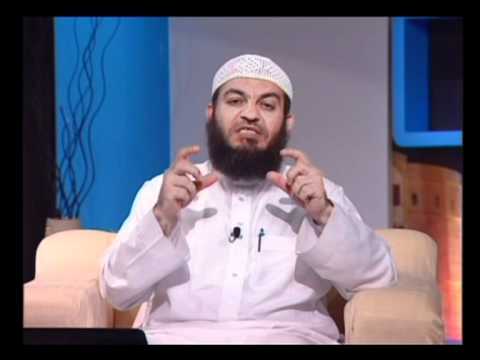
Shaykh Dr. Haitham al-Haddad is a jurist who seeks to contextualise classical Islamic knowledge for the modern era. He is a firm believer that Islam is uniquely qualified — more than any other system — to build a divine civilisation capable of helping humanity to enjoy a better life in all spheres by maintaining the correct balance between the rights of the Creator and the rights of the creation. He believes Islam is the only viable alternative to the failing unjust and oppressive contemporary world systems, as Allah says: "You are the best nation produced [as an example] for mankind: you enjoin what is right, forbid what is wrong, and believe in Allah." (al-Qur'ān, 3:110) According to this verse, Shaykh Haitham identifies the pillars of Islamic reform as īmān (faith), unity of the Ummah, impactful action, and knowledge. Drawing from his expertise in Islamic principles — Usūl al-Fiqh, Maqāsid al-Sharī‘ah, ‘Aqīdah, and other Islamic sciences — he promotes these foundational pillars to guide the Ummah’s revival. He is known for developing advanced theories that explore the role of Islamic jurisprudence in obtaining solutions for the contemporary challenges facing humanity, and he critically re-evaluates how Islamic legal rulings (fatāwa) can be formulated in light of modern sociopolitical realities. Shaykh Dr. Haitham al-Haddad earned his PhD from SOAS, University of London, with a doctoral thesis on Islamic jurisprudence concerning Muslim minorities. He also holds a bachelor’s degree in Sharī‘ah and Law from the University of Omdurman, Sudan, and a degree in engineering from the renowned King Fahd University of Petroleum and Minerals (KFUPM) in Saudi Arabia. He has undertaken intensive studies in management, becoming a certified ISO 9000 auditor. In addition, he has studied various Islamic sciences under leading scholars of the Muslim world, including the former Grand Mufti of Saudi Arabia, Shaykh ‘Abdul-‘Aziz ibn Baz, among many others. He has obtained many classical ijāzāt in various Islamic sciences, including Qur'ān and Hadīth. Shaykh Haitham has served as an Islamic judge for several UK-based arbitration and legal bodies for over 20 years; he is a judge at Islamic Council. He has delivered hundreds of courses on topics such as Fiqh, ‘Aqīdah, Usūl al-Fiqh, Maqāsid al-Sharī‘ah, Tafsīr, Sīrah, Islamic Thought, Islamic Leadership and Management, Da'wah, Reform, and Political Engagement. Shaykh Haitham has also submitted many academic papers in many universities around the world. He is frequently consulted by numerous Islamic organisations across Europe and beyond, and serves as a senior scholar at Islam21c. Shaykh Haitham has lectured in various universities around the Muslim world, provided counsel to Islamic institutions, authored several books and textbooks for different institutions, and travelled extensively to advocate for the reform and unity of the Ummah.
Follow:
385 Articles

Virtues of Ramadan Ep 28.1

0 Min Read

Playlist link

Virtues of Ramadan Ep 29.1

0 Min Read

Playlist link

Virtues of Ramadan Ep 29.2

0 Min Read

Playlist link

Virtues of Ramadan Ep 30.1

0 Min Read

Playlist link

Virtues of Ramadan Ep 30.2

0 Min Read

Playlist link

Virtues of Ramadan Ep 28.2

0 Min Read

Playlist link

The Massacre in Egypt paves the Way for an End to the Military Coup

7 Min Read

In light of the devastating massacre that occurred from the dawn of the 14th of August 2013, in Rabaa al-Adawi and other locations in Egypt, it seems it is true that some Egyptians have a short term memory. Among these are the military coup leaders including General Abdul Fattah al-Sisi. They forgot about Husni Mubarak, a President who ruled Egypt for thirty years, succeeding previous dictators who each ruled for more than a decade. Despite Mubarak only recently being deposed of his authority, they have already forgotten how he ended up behind bars. In light of the devastating massacre that

al-Tahwiyyah Pt 14- His Two Most Noble Names

8 Min Read

He once said that Allāh has a particularly Great Name (al-Ism al-A’ṭham), if called upon by it He would indeed respond.    حَيٌّ لا يَمُوتُ، قَيُّومٌ لا يَنامُ،   He is Living and Does Not Die. He is All-Sustaining and Does Not Sleep. The author continues introducing Allāh’s description and elaborating on His Perfect Names and Attributes. His statement mentions two of His Most Noble Names: al-Ḥayy and al-Qayyūm, which also signify two of His Most Lofty Attributes.   These names, which are also attributes, were mentioned together in the beginning of the greatest verse of the Quran: Ayat al-Kursi, in

al-Tahwiyyah: Pt 11- There is Nothing Like unto Him

4 Min Read

The Greeks would elevate their own heroes to the level of godhood through a process termed apotheosis. Heracles was one such man who they honoured as a god beneath Allāh! وَلا تُشْبـِهُهُ الأَنامُ     He does not resemble mankind.   Allāh does not resemble any of His creation; not in His Lordship, His Deification, nor in His Attributes. Allāh, the Most High, said: ‘There is nothing like unto Him’, making it clear to His creation that He is not from them nor like them, nor are they like Him. The author is negating both the notion of anthropomorphism, which

Was it wrong to start Ramadan 1434H on Wednesday 10th July 2013?

10 Min Read

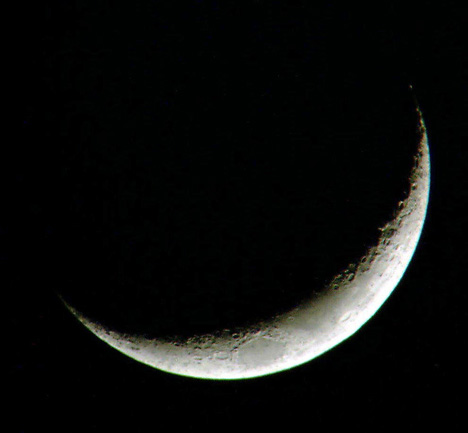
 The high court in Saudi Arabia requested people to sight the new moon of Shawwal for this year 1434H (2013) on Tuesday 6th Aug as there was a possibility that the first day of Shawwal (Eid al-Fitr) could have been Wed 7th Aug 2013.  Was it wrong to start Ramadan 1434H on Wednesday 10th July 2013? All praise be to Allah and may peace and blessings be upon His Messenger, salla Allah ‘alayhi wa sallam. The high court in Saudi Arabia requested people to sight the new moon of Shawwal for this year 1434H (2013) on Tuesday 6th Aug as