

Search
Urging the Muslims to perform Qunut for Muslims in Gaza
All praise is due to Allah, the One who hears that which is not heard by others, the one who provides relief from adversity and misfortune. May the peace and blessings of Allah be upon the Prophet, his family and all of his Companions. It is clearly apparent to the entire world that the imprisoned and occupied people of Gaza are facing an extremely appalling situation where the Israeli state of terror has unleashed an arsenal one would perhaps feel more appropriate for a world superpower. Such tyranny has resulted in hundreds of casualties ranging from elderly people to those…

Who are We and are We Proud to be British?
A Dialogue with the Muslim Community on Music, Culture, Identity and Britishness. As we said in the beginning of this series of articles, the debate around music is not limited to the legality of using musical instruments as was the case in the past; it has became part of a broader discussion that includes culture and identity. Some argue that it is acceptable to make changes to Islamic principles or that Islam may take on new forms in order to adapt to European or other cultures. They also contend that many Islamic practices are cultural and have no basis in…
A Call for Muslims to Support the Integration of Parts of Shari’ah into the British Judicial System
The incredulous debate about Shari’ah and its implementation in Britain followed the release of a number of reports that have concluded that many Muslims would like to see Shari’ah implemented in the UK. I would like to draw the attention of all Muslims and non-Muslims to a few issues concerning this topic. From the onset it should be understood that Shari’ah in its general form is synonymous to Islam. Once this is understood, we can realise that there are many parts of Shari’ah i.e., Islam, that have already been implemented in the UK. Furthermore, in terms of recognition, it is…
Principles of Fiqh: Its Meanings & Benefits
The principles [usul] of Islamic Jurisprudence [fiqh] deals with the derivation of rulings [ahkam] relating to all matters of worship ['ibadah], dealings [mu'amalat] or any type of act conducted in this life from the Qur’an and the Sunnah of His Messenger, peace be upon him. In order to do this accurately, a scholar must strictly adhere to certain principles and regulations: a science termed Usul al-Fiqh (the principles of Islamic Jurisprudence). Generally, the study of Usul al-Fiqh incorporates the study of the following four main branches: i) Islamic sources (or evidences) on which all of the ahkam have been based.…
Music: Consensus & Ijtihad pt 2
In a previous article I highlighted that the existence of a difference of opinion is not itself an evidence for a position that one holds. I also pointed out that not every difference of opinion is well-founded and therefore legitimate. This subject matter is by its nature academic and I will explore more of its elementary points since it forms a focal point of our discussion. Such fundamental notions and methods that connect us to the Shari’ah and define our convictions and practice must be read and presented according to the understanding of the overwhelming majority of scholars. Lexically, ijtihad…
Music- A Simple Matter of Disagreement? pt 1
In an article written by Sister Yvonne Ridley titled Pop Culture in the name of Islam,1 she heavily criticised a recent phenomenon sweeping through Muslim communities across the UK and affecting both the young and more mature generations. The condemnation was particularly directed towards Brother Sami Yusuf. Reasons for this could be due to certain statements he made as well as his status as one of the foremost stars of ‘Islamic music’. Sami responded in turn and in his letter2 he addressed a number of ideological concepts currently debated in the public domain. He used the discourse on Islamic music…
The Obligation to Support the Proposed New Mosque in East London
There has been an ongoing debate concerning the proposed establishment of a new mosque in East London. It is true that many Muslims and some non-Muslims are supporting it, yet we have also witnessed opposition to it from many including some members of the Muslim community. I find myself obliged to clarify the Islamic opinion regarding supporting the establishment of this mosque in particular and any other mosque for that matter. Mosques are blessed premises where the words of the Creator are recited and taught. They are centres of mercy and peace for the whole of humanity. They are houses…
The Islamic Mortgage: Paradigm Shift or Trojan Horse?
All praise is due to Allah and may His peace and blessings be upon our Prophet Muhammad, his family and all his Companions. During recent years there has been an unprecedented expansion in the range of commercial banking products labelled as “ Shari`ah compliant” in many countries of the world. Popular interest among Muslims in the Shari`ah of financial transactions has increased likewise, and in the United Kingdom the permissibility of so-called “Islamic mortgages” is among the most frequent topics of enquiry. We therefore thought it appropriate to record here what we see as the main problems associated with this…
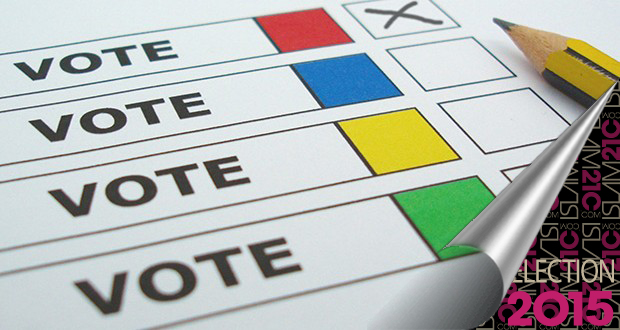
Advice To British Muslims Regarding The Coming Elections
In the current climate, many brothers and sisters in Britain have become preoccupied with the issue of the coming elections and debating the question of whether Muslims are allowed to vote and which party is most deserving of our vote. In reply, I would like to present the following clarification and advice. It is clearly evident to any Muslim who possesses a basic understanding of Islām that the greatest and most important aim of Islamic law is the deterrence of evil or the reduction of harm; the attainment of good or its increase. The establishment of a harmonious and successful…

Cooperation in Da’wah
Hence, many of these youngsters remain somewhat confounded by the mutual pull of these two pivotal matters: the benefit of working for Islam in an active and effective manner on the one hand and the harm of cooperating with opponents on the other. Indeed, the manifestations of this contradiction and bewilderment increase in accordance with the situations workers for Islam find themselves in. Nonetheless, irrespective of any given situation, the harm that returns to any one of them does not rise to the amount of damage that befalls the Islamic call and the future of the Muslims. This is a…