

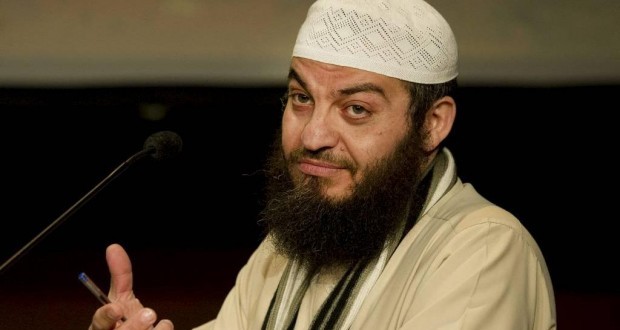
Dr. Haitham al-Haddad is a jurist and serves as a judge for the Islamic Council of Europe. He has studied the Islamic sciences for over 20 years under the tutelage of renowned scholars such as the late Grand Mufti of Saudi Arabia as well as the retired Head of the Kingdom’s Higher Judiciary Council. He specialises in many of the Islamic sciences and submitted his doctoral thesis on Islamic jurisprudence concerning Muslim minorities. Shaikh Haitham is highly respected having specialised knowledge in the field of fiqh, usul al-fiqh, maqasid al-shari’ah, ulum al-Qur’an, tafsir, aqidah, and fiqh al-hadith. He provides complex theories which address the role of Islamic jurisprudence within a western environment whilst also critically re-analysing the approach of Islamic jurists in forming legal rulings (ifta’) within a western socio-political context. He has many well known students most of whom are active in dawah and teaching in the West. The shaikh is an Islamic jurist (faqih) and as such is qualified to deliver verdicts as a judge under Islamic law, a role he undertakes at the Islamic Council of Europe as Islamic judge and treasurer. Dr Haitham al-Haddad also sits on various the boards of advisors for Islamic organisations, mainly in the United Kingdom but also around the world.
Sheikh (Dr) Haitham Al-Haddad
Share This Article
Shaykh Dr. Haitham al-Haddad is a jurist who seeks to contextualise classical Islamic knowledge for the modern era. He is a firm believer that Islam is uniquely qualified — more than any other system — to build a divine civilisation capable of helping humanity to enjoy a better life in all spheres by maintaining the correct balance between the rights of the Creator and the rights of the creation. He believes Islam is the only viable alternative to the failing unjust and oppressive contemporary world systems, as Allah says: "You are the best nation produced [as an example] for mankind: you enjoin what is right, forbid what is wrong, and believe in Allah." (al-Qur'ān, 3:110) According to this verse, Shaykh Haitham identifies the pillars of Islamic reform as īmān (faith), unity of the Ummah, impactful action, and knowledge. Drawing from his expertise in Islamic principles — Usūl al-Fiqh, Maqāsid al-Sharī‘ah, ‘Aqīdah, and other Islamic sciences — he promotes these foundational pillars to guide the Ummah’s revival. He is known for developing advanced theories that explore the role of Islamic jurisprudence in obtaining solutions for the contemporary challenges facing humanity, and he critically re-evaluates how Islamic legal rulings (fatāwa) can be formulated in light of modern sociopolitical realities. Shaykh Dr. Haitham al-Haddad earned his PhD from SOAS, University of London, with a doctoral thesis on Islamic jurisprudence concerning Muslim minorities. He also holds a bachelor’s degree in Sharī‘ah and Law from the University of Omdurman, Sudan, and a degree in engineering from the renowned King Fahd University of Petroleum and Minerals (KFUPM) in Saudi Arabia. He has undertaken intensive studies in management, becoming a certified ISO 9000 auditor. In addition, he has studied various Islamic sciences under leading scholars of the Muslim world, including the former Grand Mufti of Saudi Arabia, Shaykh ‘Abdul-‘Aziz ibn Baz, among many others. He has obtained many classical ijāzāt in various Islamic sciences, including Qur'ān and Hadīth. Shaykh Haitham has served as an Islamic judge for several UK-based arbitration and legal bodies for over 20 years; he is a judge at Islamic Council. He has delivered hundreds of courses on topics such as Fiqh, ‘Aqīdah, Usūl al-Fiqh, Maqāsid al-Sharī‘ah, Tafsīr, Sīrah, Islamic Thought, Islamic Leadership and Management, Da'wah, Reform, and Political Engagement. Shaykh Haitham has also submitted many academic papers in many universities around the world. He is frequently consulted by numerous Islamic organisations across Europe and beyond, and serves as a senior scholar at Islam21c. Shaykh Haitham has lectured in various universities around the Muslim world, provided counsel to Islamic institutions, authored several books and textbooks for different institutions, and travelled extensively to advocate for the reform and unity of the Ummah.
1 Comment
Leave a Reply


Salaam, can you post some articles on the Quran and how it has the treatment for the problems of our current affairs, if only we Muslims would go back to its proper teachings.
Please can you do summaries of stories and themes of the Quran, and to encourage Muslims to be better members of our society as most non Muslims perceive us to be angry, non sharing, non caring people of the community.
Please can you show more articles about various UK Muslims that are good role models for our youth of today.
There is a good video on Shame by Nouman Ali Khan, can you please do more articles on how we can teach the youth today on etiquettes dealing with the opposite gender. I include all writers on islam21C to bring up these subjects please.
Jazakhallah khair Shaikh